Recently Renovated? Make Sure Your Indoor Air Is Safe Before Moving In.
Professional formaldehyde testing and treatment services for newly renovated homes and offices across Singapore. Verified before-and-after readings issued with every treatment.
Get Your Free Consultation
We respond within one working day. No sales calls.
You May Be Exposed Without Realising It
Formaldehyde is colourless and often undetectable by smell at typical indoor concentrations. Testing is the only reliable way to know your indoor air is safe.
New BTO Owners
BTO flats with full carpentry renovation typically exceed WHO formaldehyde guidelines at key collection — often before furniture is even moved in.
Recently Renovated Homes
New built-in carpentry, laminate flooring and adhesives off-gas simultaneously. The renovation is complete, but indoor air quality remains elevated.
New Furniture Installations
New sofas, mattresses and upholstered pieces add to total indoor formaldehyde load — especially in enclosed, air-conditioned rooms.
Built-In Carpentry
Built-in wardrobes and kitchen cabinets made from MDF or particleboard are the primary sustained emission sources in most Singapore renovations.
Office Renovations
Staff spend 8+ hours daily in office environments. Post-renovation formaldehyde testing protects employee health and supports duty-of-care obligations.
Families With Young Children
Children breathe proportionally more air relative to body weight and spend more time at home — making air quality assessment a priority before move-in.
Formaldehyde is invisible and often cannot be detected by smell alone. Testing is the only reliable way to confirm your indoor air is safe before you move in.
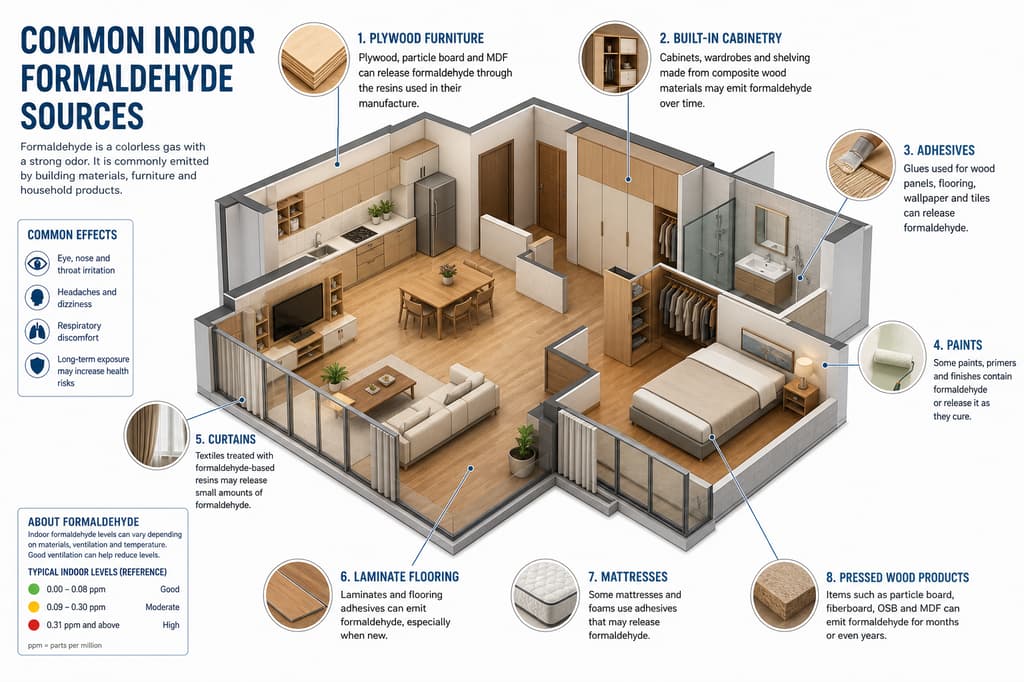
Common Sources Found In Newly Renovated Homes
The more carpentry, engineered wood and adhesive in a renovation, the higher the initial concentration. Understanding sources helps identify your risk level.
Built-In Wardrobes
The single largest emitter in most homes. MDF carcasses and adhesives off-gas from both board and joinery.
Kitchen Cabinets
High-volume MDF and particleboard cabinetry with elevated temperatures from cooking accelerates off-gassing.
Carpentry & Joinery
Any built-in timber structure — TV consoles, study shelving, display units — uses engineered board and adhesive.
Laminate Flooring
Engineered timber and laminate flooring uses urea-formaldehyde resins in core layers and installation adhesives.
Construction Adhesives
Tile grouts, silicone sealants and construction adhesives release formaldehyde in the first weeks after application.
Interior Paints
Some interior paints and wood finishes use formaldehyde-based preservatives — particularly lower-cost products.
Engineered Wood Panels
Ceiling boards, wall panels and gypsum boards contain additives that off-gas, especially in Singapore's ambient heat.
Upholstered Furniture
New sofas, mattresses and curtains may contain formaldehyde-treated fabrics and foam, adding to the total indoor load.
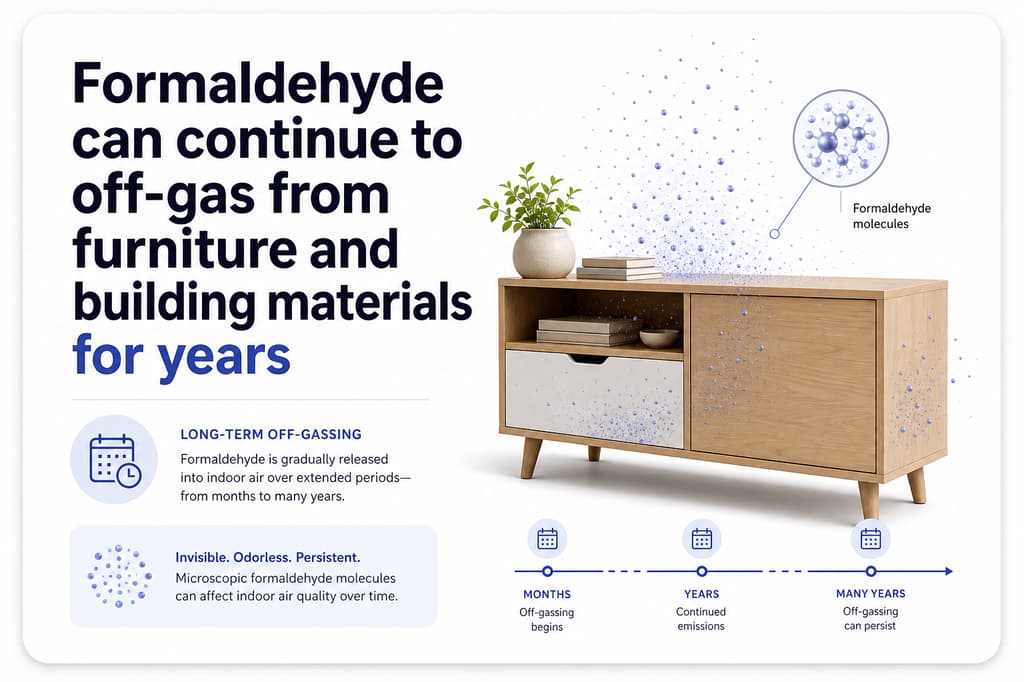
Many Materials Continue Releasing Formaldehyde For Years
Ventilation is often the first instinct. It is not the solution.
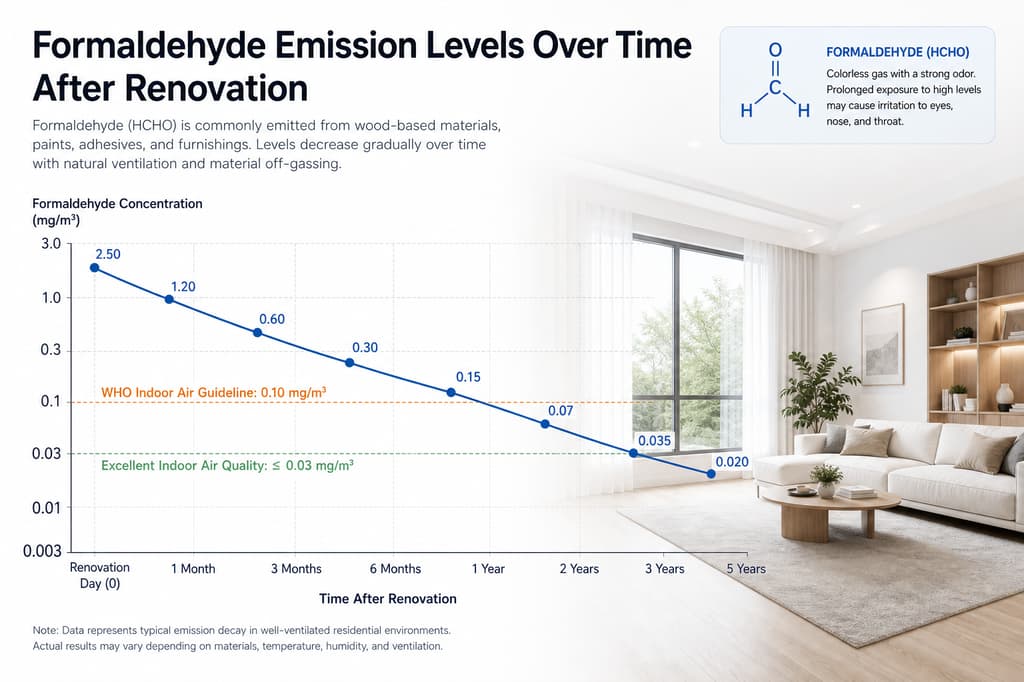
Opening windows reduces formaldehyde concentrations temporarily by diluting indoor air — but does not stop the underlying off-gassing. Materials continue releasing formaldehyde whether ventilated or not.
Without treatment, renovation materials in a Singapore home can sustain above-guideline formaldehyde concentrations for 2–5 years. Singapore's warm climate accelerates off-gassing rates compared to cooler climates — meaning higher concentrations in the early months.
Ventilation helps, but it does not remove the source of emissions. Treatment addresses the source.
- ✕Built-in carpentry off-gases for up to 5 years without treatment
- ✕New furniture adds additional load each time a new piece is brought in
- ✕Singapore's heat accelerates off-gassing year-round — unlike cooler climates
Don't Move In Without Knowing The Numbers.
Most newly renovated BTOs and condos exceed WHO formaldehyde guidelines at key collection. Test before you move in.
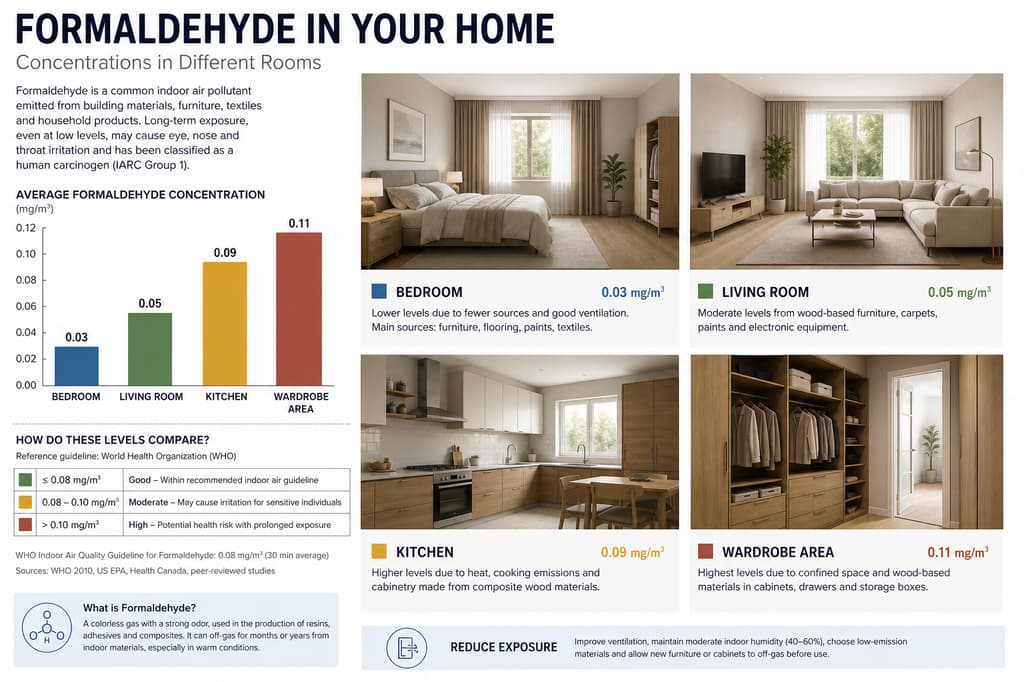
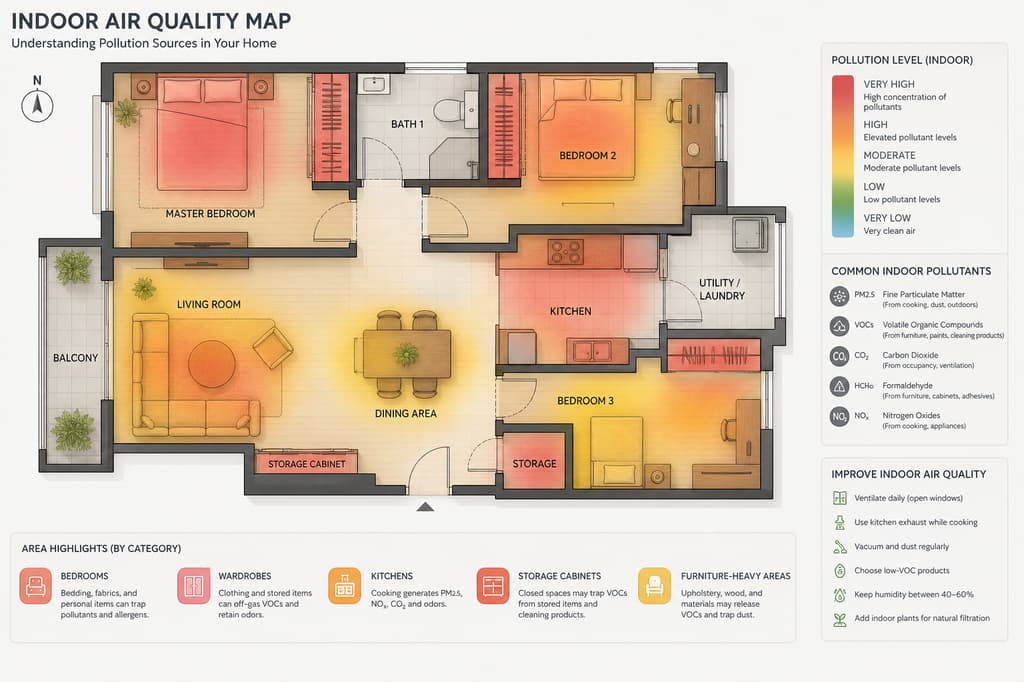
Different Areas Of Your Home Can Have Different Concentration Levels
A single whole-home average reading misses the areas that matter most. We test every room individually.
Why Indoor Air Quality Matters
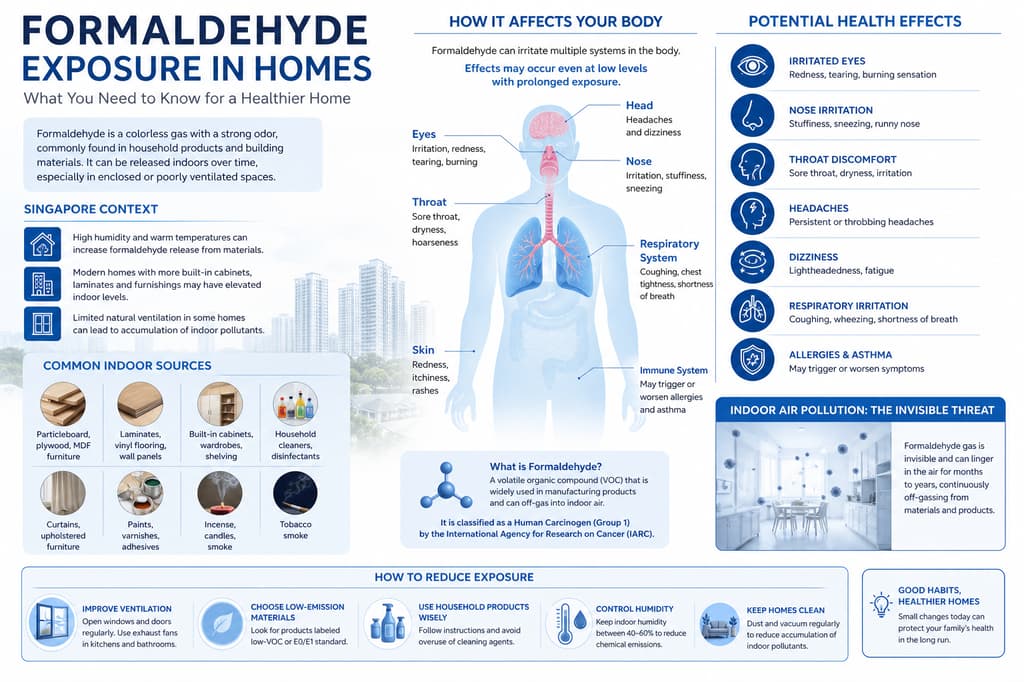
Formaldehyde at elevated concentrations can affect indoor comfort and wellbeing. These are the most commonly reported effects at above-guideline concentrations.
Eye Irritation
Burning or watering eyes — often among the first symptoms at elevated concentrations.
Nasal Irritation
Nasal congestion and sneezing frequently reported in newly renovated spaces.
Throat Irritation
Persistent dry cough or sore throat, particularly on waking in a newly renovated room.
Headaches
Recurring headaches — especially in enclosed spaces — can indicate elevated indoor VOC levels.
Respiratory Discomfort
Shortness of breath and worsening asthma symptoms associated with sustained exposure above WHO guideline levels.
Effects vary by concentration and duration of exposure. This information is for awareness. Testing is the recommended next step.
Professional Air Quality Assessment
We identify where formaldehyde concentrations are highest — not a single average reading for the whole home.
We identify where formaldehyde concentrations are highest — and treat those areas with appropriate intensity. Not a blanket application, but a targeted, data-driven approach.
How Our Assessment Works
From initial inspection to signed results report — typically completed in three days.
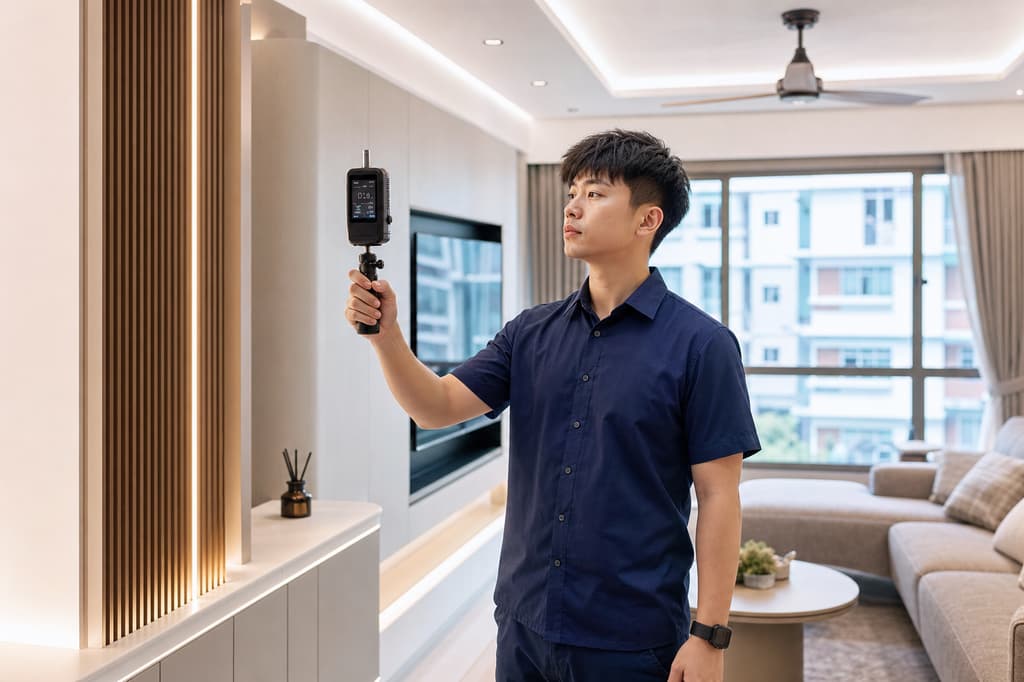
Property Inspection
Site survey — renovation age, materials used, carpentry volume, number of rooms. Scope and approach defined before sensors are deployed.
Air Quality Testing
Calibrated sensors deployed in each room. Windows closed for a standardised soak period to ensure comparable, reliable readings.
Concentration Analysis
Room-by-room readings analysed and compared against WHO Indoor Air Quality Guidelines. High-concentration zones identified for targeted treatment.
Treatment Recommendation
Treatment plan calibrated to pre-treatment readings. Room-specific intensity, method and coverage confirmed before application begins.
Verification Testing
Re-testing 24 hours after treatment confirms effectiveness. Signed before-and-after results report issued once WHO compliance is confirmed.
Ready to Test Your Indoor Air Quality?
We test, treat, and verify. Most clients move in within three days of booking.
Professional Formaldehyde Treatment
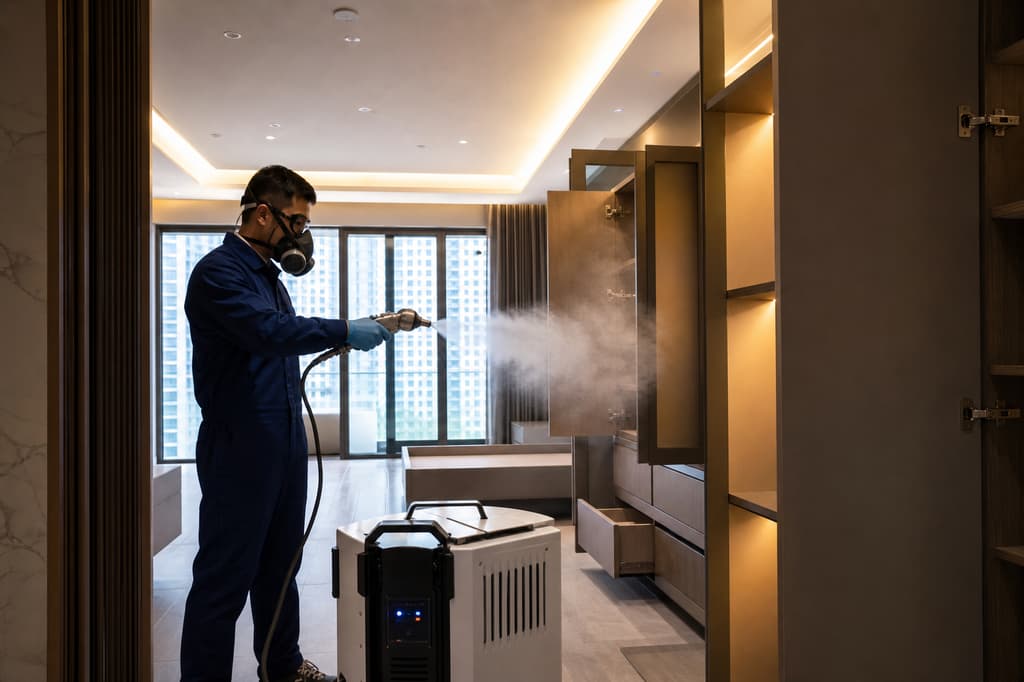
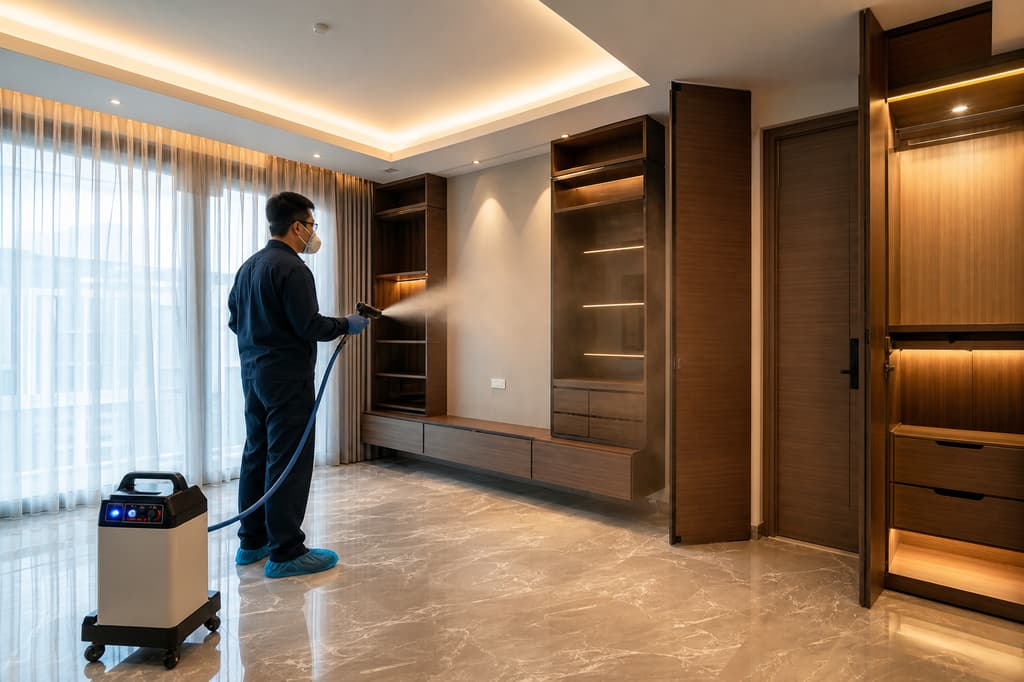
Two complementary treatment methods applied in a single session — photocatalytic oxidation and activated-carbon adsorption — covering every room, surface and enclosed space.
Pre-Treatment Assessment
Baseline air quality readings taken. High-concentration zones identified and treatment plan calibrated before application begins.
Treatment Application
Photocatalytic oxidation agent applied to surfaces, breaking down formaldehyde molecules at the source. Activated-carbon media deployed for airborne capture.
Whole-Room Coverage
Every room treated in a single session including enclosed wardrobes, cabinets and storage — the highest-concentration areas in most Singapore homes.
Post-Treatment Verification
Re-testing 24 hours after treatment. Signed before-and-after results report issued once WHO-guideline compliance is confirmed by room.
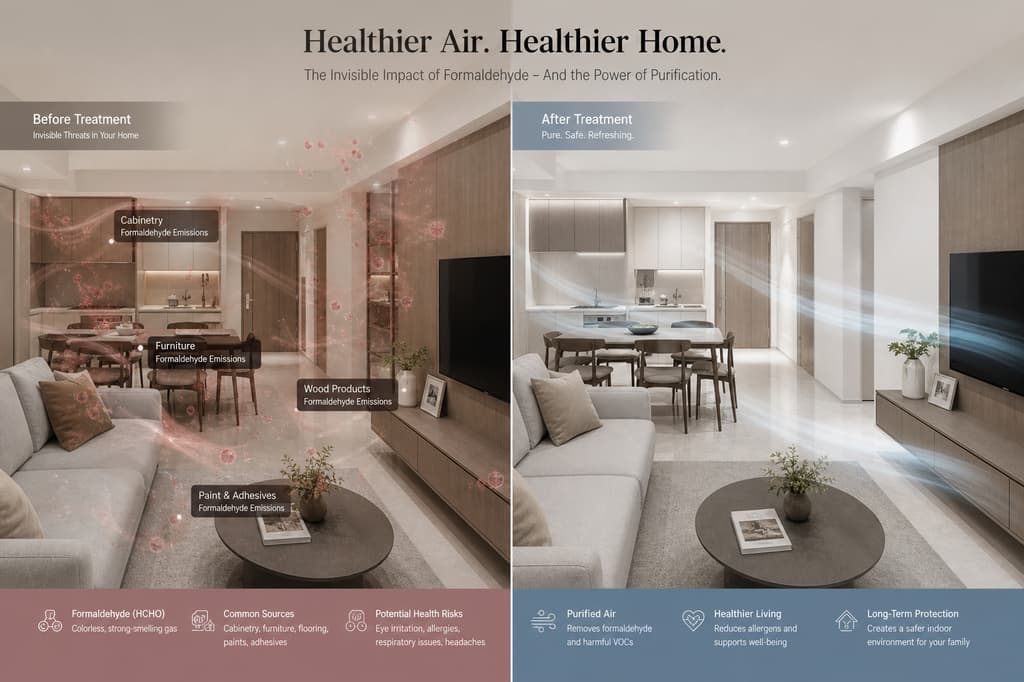
Verified Reduction In Formaldehyde Levels
Results are verified through post-treatment measurements — not estimates. We issue a signed before-and-after report once levels confirm WHO compliance.
(25× above WHO limit)
Quality Guideline limit
80% below WHO limit
issued after post-treatment test
Why Homeowners Trust Iboluo Concepts
We do not offer generic treatment. Every assessment is data-driven, every result is verified, every report is signed.
Professional Air Quality Testing
Calibrated electrochemical sensors, not consumer-grade devices. Room-by-room readings with standardised protocols give results you can rely on.
Data-Driven Assessments
Treatment intensity is calibrated to your pre-treatment readings — not a standard blanket application. Targeted, efficient, effective.
Before & After Verification
Every treatment is followed by independent re-testing. We don't sign off until we can show you the before-and-after numbers, by room.
Residential & Commercial
Homes, offices, childcare centres, clinics and retail spaces — scoped and priced per use type. Island-wide Singapore coverage.
Detailed Reporting
A signed results report with before-and-after readings by room, technician details, date and WHO reference values — accepted by landlords and licensing authorities.
Move-In Readiness Support
We advise on move-in timing based on verified readings. No guesswork — you move in when the air confirms it is safe to do so.
Formaldehyde Treatment Singapore — Ideal For
Any newly renovated space with built-in carpentry benefits from testing before occupancy.
New BTO Units
New Condominiums
Landed Homes
Office Renovations
Retail Spaces
Childcare Environments
Families with Children
Move-In Preparation
Book Your Air Quality Assessment Today.
We test, treat and verify. Respond within one working day.
Move In With Greater Confidence
Testing and treatment gives you verified numbers — not guesswork — before your family moves in.
Common Questions
Everything you need to know about formaldehyde testing and treatment in Singapore before booking.
Still have questions? We respond within one working day.
Ask Us Anything